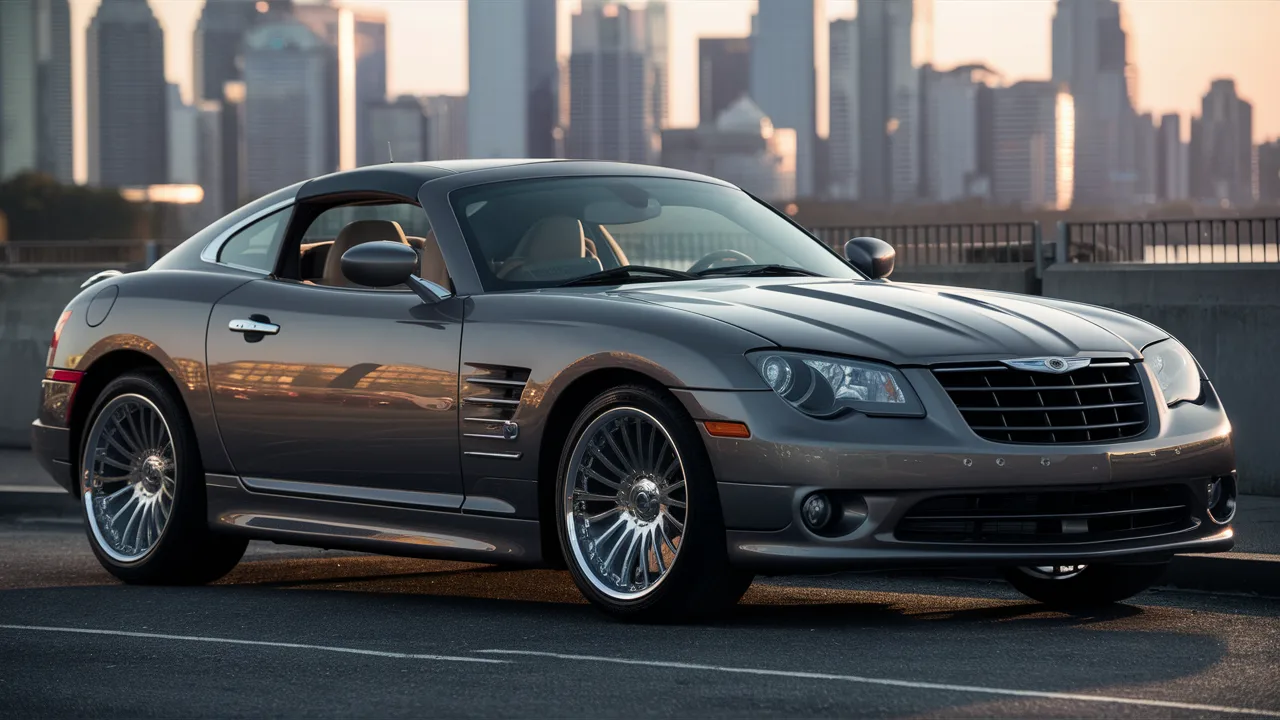
Chrysler Crossfire – A Bold American-German Sports Car with a Unique Identity
The Chrysler Crossfire is one of the most distinctive sports cars produced in the early 2000s. Built by Chrysler, the Crossfire is known for its unusual styling, Mercedes-based engineering, and limited production run. It was a product of the short-lived partnership between Chrysler and Mercedes-Benz under DaimlerChrysler, and it remains a memorable example of transatlantic automotive collaboration.
Although it was not a high-performance supercar, the Crossfire developed a cult following due to its bold design, rare presence on the road, and enjoyable driving experience. Today, it is often appreciated as a modern classic with unique character.
The Origins of the Chrysler Crossfire
The Chrysler Crossfire was first introduced in the early 2000s during a period when Chrysler was looking to strengthen its brand identity with more stylish and performance-oriented vehicles.
A key factor behind the Crossfire’s creation was the merger between Chrysler and Daimler-Benz, forming DaimlerChrysler. This partnership allowed Chrysler to use Mercedes-Benz platforms and engineering.
The Crossfire was built on the same platform as the Mercedes-Benz SLK-Class, which significantly influenced its mechanical design and driving dynamics.
Key development goals:
- Create a stylish American sports car
- Use proven German engineering
- Improve Chrysler’s global image
- Offer a premium yet affordable coupe/roadster
Exterior Design – Bold, Controversial, and Memorable
One of the most talked-about aspects of the Crossfire is its exterior design.
Design highlights:
- Long hood with short rear deck
- Distinctive “crossed” body lines (inspired by its name)
- Wide rear fenders
- Fastback coupe styling
- Large center exhaust design
The design was created by Khuram Y. Sarwar and Chrysler’s design team, aiming for a futuristic and aggressive appearance.
At the time of its release, opinions were divided:
- Some praised its uniqueness
- Others felt it was unconventional
However, over time, many enthusiasts came to appreciate its bold styling as part of its identity.
Coupe and Roadster Variants
The Crossfire was offered in two main body styles:
1. Coupe Version
- Fixed roof design
- More rigid chassis feel
- Sleek fastback profile
2. Roadster Version
- Retractable soft top
- Open-air driving experience
- Slightly softer ride
The roadster became particularly popular among drivers who wanted a stylish convertible sports car.
Engine and Performance
The Chrysler Crossfire was not designed to be an extreme performance car, but rather a balanced sports cruiser.
Engine specifications:
- 3.2-litre V6 engine
- Derived from Mercedes-Benz technology
- Around 215 horsepower (standard model)
- Higher output in Crossfire SRT-6 version
Performance characteristics:
- Smooth acceleration
- Refined engine response
- Comfortable highway cruising
- Balanced rear-wheel-drive handling
The Crossfire shared much of its mechanical DNA with Mercedes engineering, which gave it strong reliability and solid performance foundations.
The SRT-6 Performance Model
The high-performance version of the Crossfire was the Chrysler Crossfire SRT-6, developed by Chrysler’s SRT division.
Key upgrades included:
- Supercharged 3.2-litre V6 engine
- Approximately 330 horsepower
- Faster acceleration and top speed
- Sport-tuned suspension
- Upgraded brakes
The SRT-6 significantly improved the Crossfire’s performance, making it much more competitive against European sports cars of its time.
Interior Design – Simple but Functional
Inside, the Crossfire focused more on practicality than luxury.
Interior features:
- Two-seat layout
- Driver-focused cockpit
- Mercedes-style switchgear
- Leather upholstery options
- Simple dashboard layout
The interior shared many components with Mercedes-Benz models, which improved build quality but limited uniqueness.
Cabin experience:
- Comfortable front seats
- Limited storage space
- Tight rear visibility due to design
- Functional but not highly luxurious
While not the most modern interior, it was solid and well-built for its era.
Driving Experience – Balanced and Stable
The Crossfire delivers a driving experience focused on balance rather than extreme performance.
Driving characteristics:
- Rear-wheel-drive layout
- Stable cornering ability
- Predictable handling
- Smooth highway performance
Because it was based on a Mercedes platform, the Crossfire felt more refined than many American sports cars of its time.
The steering is light and easy to manage, making it suitable for both city driving and longer trips.
Technology and Features
For its time, the Crossfire included a reasonable level of equipment.
Common features:
- Climate control system
- Premium sound system options
- Power-adjustable seats
- Basic infotainment system
- Stability control systems
While not advanced by modern standards, these features were competitive in the early 2000s sports car segment.
Market Position and Competition
The Chrysler Crossfire competed in a niche segment of affordable luxury sports cars.
Main competitors included:
- BMW Z4
- Audi TT
- Mercedes-Benz SLK-Class
Compared to these rivals, the Crossfire stood out due to:
- Unique American-European design blend
- Lower production numbers
- Distinct styling identity
However, it was often considered less powerful or refined than its German competitors.
Sales Performance and Production Life
Despite its bold design and strong engineering foundation, the Crossfire did not achieve major commercial success.
Reasons for limited success:
- Polarizing design
- Strong competition in the segment
- Brand perception challenges
- Limited marketing focus
Production ended in 2008 after a relatively short production run, making it a rare sight today.
Why the Chrysler Crossfire Is Still Remembered
Even though it was not a sales leader, the Crossfire remains memorable for several reasons:
Key points of interest:
- Unique styling that stands out even today
- Mercedes-based engineering reliability
- Limited production numbers
- Distinct identity in Chrysler’s lineup
Enthusiasts often view it as a “hidden gem” in modern classic sports cars.
Legacy of the Crossfire
The Chrysler Crossfire represents an interesting moment in automotive history when global partnerships shaped vehicle design and engineering.
It demonstrated:
- The potential of platform sharing
- The challenges of brand identity integration
- The importance of design acceptance in the market
While Chrysler later moved in different directions, the Crossfire remains a symbol of experimentation and collaboration.
Conclusion
The Chrysler Crossfire is a unique sports car that reflects a special era in automotive history. Built by Chrysler using Mercedes-Benz engineering, it combined bold design, solid performance, and distinctive character.